
Windham City Directory Holdings
Windham’s known historical collections do not form one complete shelf. The strongest verified city directory is the Price & Lee volume for 1938–1939, preserved through the Eastern Connecticut State University Center for Connecticut Studies and represented in Digital Windham. An ECSU exhibit also cites street entries from a 1909–1910 directory. The Library of Congress guide identifies a 1984–1985 Willimantic criss-cross directory lead, but its holding and page range still need confirmation.
| Collection | Years | Where Held | Access |
|---|---|---|---|
| Congregational Church records | 1700–1852 | ECSU Digital Windham | Digital collection; image and text vary |
| Journal and Chronicle material | 1857–1862; 1879–1894 selections | Digital Windham and Willimantic Library | Indexes, transcriptions, and card-based databases |
| Historical directory examples | 1909–1910 | Digital Windham exhibit | Named street and business examples |
| Price & Lee Willimantic directory | 1938–1939 | ECSU Center and Digital Windham | Metadata online; physical/reference follow-up |
| Willimantic criss-cross lead | 1984–1985 | LOC guide; local holding unverified | Confirm volume and page access |
| Willimantic Sanborn maps | 1887–1924 listed years | Yale, LOC, and ECSU sources | Building and street context, not occupant proof |
No authoritative public inventory establishes every Windham or Willimantic directory year, publisher change, or final printed edition. That is a documented gap, not a reason to fill in a run. Ask ECSU, Willimantic Library, the Connecticut State Library, or Jillson House about a specific year and title. Record whether the answer points to a catalog record, original volume, microfilm, scan, index, or transcription.
Windham’s Price and Lee Volume
The Digital Windham catalog item identifies the publication as Willimantic Directory 1938–1939 Including Windham and Coventry. Price & Lee Company published it in 1938, and ECSU lists the call number Ref F104.W46. The scope reaches beyond a surname list: citizens, classified businesses, a map, street directory, town and city officers, churches, schools, societies, and corporations.
This breadth makes the volume a strong Windham reference source. A resident entry can be checked against a street section; a business can be checked under its class; an officer or institution can be tied to civic pages. Yet the edition proves only that the information appeared for that publication period. It does not prove present residence, ownership, or continuous occupancy.
Digital metadata did not expose a page-level citizen entry during text inspection. Use the online item to identify the volume, then ask ECSU for the page or physical copy. Cite the edition and page when available. A catalog summary alone should not be quoted as if it were the printed entry.
Search Digital Windham Collections
The Digital Windham collection brings together records that can support a printed-directory find: Congregational Church records, Willimantic probate material, the Journal index, Chronicle items, maps, postcards, and the 1938–1939 volume. These sources differ in form. A transcription is searchable text, an index points toward another record, and a scan preserves the page itself.
A name from the directory may reappear in a notice, church entry, probate transcription, or organization reference. Compare exact dates and roles. A business heading does not establish a home address, and a church or probate mention may concern a relationship rather than residence. Keep the original language and spelling in notes, then add a normalized form for searching.
Digital Windham also supplies place context. Its 1903 map and 1909 aerial can help locate a block between printed directory years. That comparison is most useful when an old address no longer matches the current street grid.
Windham Directory Research Desks
The ECSU Center for Connecticut Studies holds regional histories, reports, manuscripts, newspapers, journals, dissertations, military rolls, directories, and census material. Access is by appointment through the J. Eugene Smith Library in Willimantic. Staff can help identify a catalog item or physical volume when online coverage stops.
ECSU Center
Best for regional manuscripts, directories, newspapers, census material, and collection-level guidance by appointment.
Willimantic Library
Best for local reference, America’s News and The Chronicle under library card and database access rules.
State Library
Best for genealogy guides, town documents, finding aids, historic courts, maps, census, and archival referrals.
Jillson House
Best for Windham Historical Society context, local memory, memorabilia, and appointment-based referrals.
Review Jillson House and Windham Historical Society access information before planning a local-history visit.
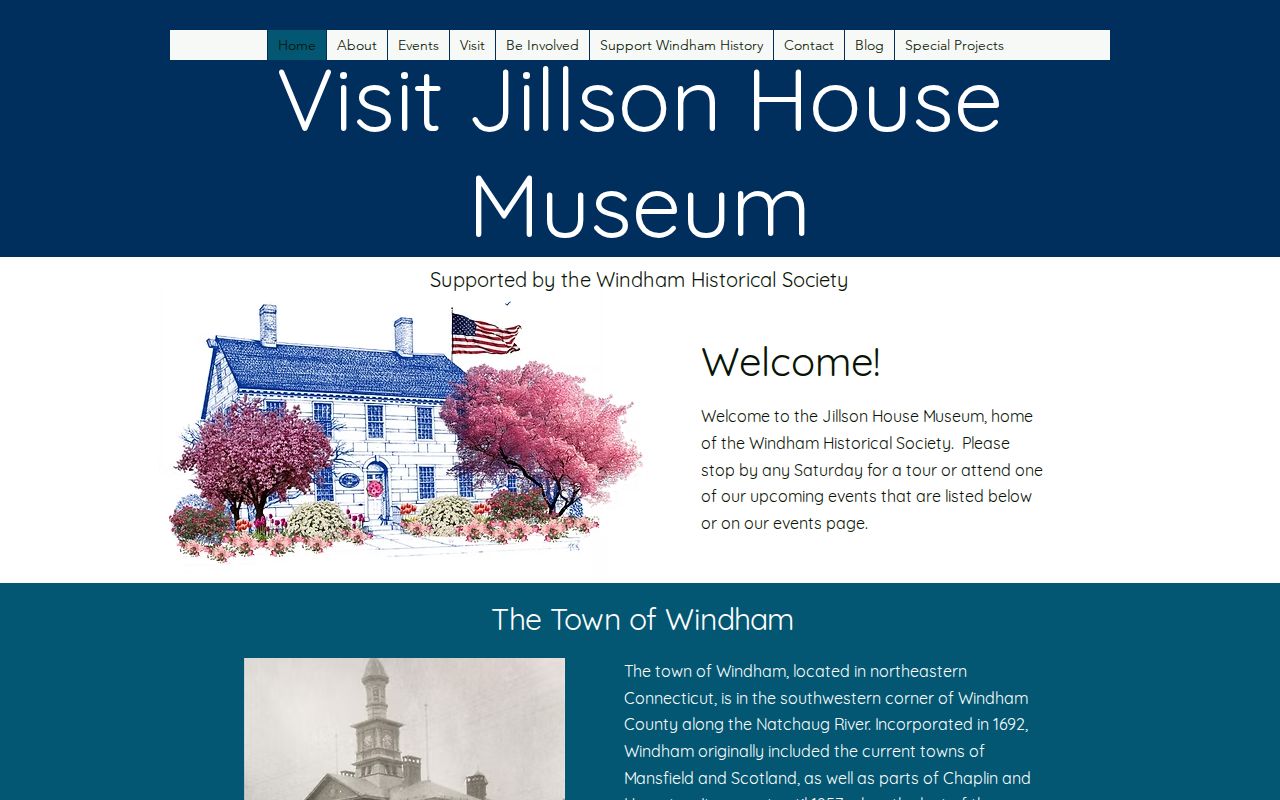
The museum’s local context can explain a building or family reference, while the directory page or archival record remains the citation for a specific name and address.
The Willimantic Library database page lists America’s News, The Chronicle, and ResearchIT CT access. Some resources require a library card or on-site use. The Connecticut State Library genealogy hub adds catalogs, guides, reference contacts, and archival routes. These are complementary access channels, not duplicate portals.
Read a Windham Directory Entry
Begin with the title page and abbreviation key. These volumes were compressed reference books, so a short entry may combine a name, street address, business class, organization, or household clue. The inspected Digital Windham metadata confirms these categories for the 1938–1939 edition, but a page image is still needed before assigning a symbol or abbreviation to that specific book.
| Name | Printed person, household, business, officer, or organization name |
|---|---|
| Address | House number and street as printed for that edition |
| Category | Citizen, street, classified business, civic, church, school, society, or corporation section |
| Map context | Street or district placement available in the volume |
| Source status | Original page, scan, transcription, index, exhibit citation, or metadata only |
- Criss-cross directory
- A volume or section arranged by street and house number, useful when the address is known first.
- Householder index
- An index centered on the person or household associated with an address in that edition.
- Abbreviation key
- The publisher’s legend for shortened terms and marks; save it with the cited entry.
Do not import abbreviation meanings from an unrelated directory. Read the key in the same edition. If only metadata or an exhibit caption is available, say so. That source-status field prevents a search result from looking more complete than it is.
Windham’s 1909 Street Pattern
Digital Windham’s transportation exhibit cites a 1909–1910 directory and prints historical examples at specific addresses on Lewiston Avenue, Jackson Street, and Main Street. The people and businesses belong to that dated exhibit only. Their value is methodological: they show that an old street listing can connect an exact number to a named person or business.
The pattern is especially useful on Willimantic’s Main Street and former mill, river, and rail landscape. A directory can identify what the publisher associated with an address; a Sanborn map can show building form or use; a modern assessor card can identify the current parcel. Put those three facts side by side without claiming they describe the same occupant.
This is also a spelling problem. Immigrant surnames, initials, married and maiden names, suffixes, OCR errors, and nearby-town movement can split one trail. Search a short surname, try initials, then browse the street section. Preserve the printed version even after finding a likely match.
Willimantic and Windham by Era
Windham was incorporated in 1692, reached its present boundary shape in 1857, and absorbed the separate Willimantic city government through consolidation on July 1, 1983. Those three dates explain why an old volume, map, deed, and modern parcel may use different place labels for the same general area.
| 1692 | Windham incorporated; early town and church records follow historical custody. |
|---|---|
| 1857 | Present town boundary shape formed, important for earlier place references. |
| 1909–1910 | Digital Windham exhibit cites street-level directory examples. |
| 1938–1939 | Price & Lee directory includes Willimantic, Windham, and Coventry. |
| 1983 | Willimantic city government consolidated with the Town of Windham. |
| 1984–1985 | LOC guide identifies a Willimantic criss-cross directory lead. |
Preserve “Willimantic” when that is what the source prints. Add “present Town of Windham” as a separate note only after verifying the location. North Windham, South Windham, and Windham Center are local district or postal labels, not independent municipalities.
Cross-Check Windham Directory Names
A printed entry is strongest when another dated source agrees. Willimantic Library’s Chronicle access and Digital Windham’s Journal and Chronicle material can add notices, organizations, public proceedings, property sales, and addresses. Save the newspaper title, date, page, and image status. An index hit should lead to the issue page, not stand in for it.
The 1892 Willimantic Sanborn map, Yale’s listed Sanborn years from 1887 through 1924, and ECSU map or aerial items supply street and building context. These maps show use and form, not a current household. They help resolve an old number or vanished block before a directory entry is compared with a present parcel.
Church records from 1700–1852, probate material, cemetery clues, and State Library town documents can add relationships and dates. Treat each as its own record type. A church member, probate party, dog-list name, committee member, or newspaper subject is not automatically a resident at the directory address.
Trace Family Through Windham Directories
A family-history search should move between editions, census years, newspapers, and original records. The Windham city directory provides a dated address association. Census material may add a household structure for its own enumeration date, while deeds, probate, church, vital, or cemetery records can test relationships and life events.
- Find the earliest verified name or address in a Windham or Willimantic edition. Save the title, year, page, spelling, and section.
- Search the next known edition and note moves, category changes, initials, or disappearance. Do not assume a gap means death.
- Use the street or criss-cross section to test the address from the opposite direction.
- Pair nearby directory years with census material, then check newspapers, church records, probate, and vital sources for dated support.
- Map an old address with a Sanborn sheet or aerial before attaching it to a current parcel.
A person may vanish because of a move, death, spelling change, publication gap, exclusion from the edition, or a change in how the household was indexed. Search the address, spouse or relative, business, and newspaper dates before choosing among those explanations.
For modern address-keyed parcel and deed work, move to the Windham street records workflow. Historical directory evidence should remain tied to its publication year.
Windham Directory Gaps Matter
Several limits are known. No complete year-by-year inventory was exposed. The 1938–1939 viewer supplied metadata and scope, but not a page-level citizen image in text inspection. The 1984–1985 criss-cross reference is a lead whose exact holding remains unverified. No complete local obituary or school-yearbook inventory was found.
Use the fallback chain instead of guessing: search Digital Windham; contact ECSU for an appointment or page request; check Willimantic Library databases and reference help; consult the Connecticut State Library catalogs and guides; ask Jillson House about local context; and use Town Clerk archives when a municipal record is the real target. Give staff a title, year, name, street, and the form of evidence already found.
Source check. Label every result as a page image, index, transcription, exhibit citation, catalog record, or staff referral before using it in a family timeline.
A “no result” online is not proof that Windham lacks the directory or name. It may mean the edition is physical, the item is not indexed, the spelling differs, or access requires a card or appointment. State the gap plainly and preserve the next repository to contact.