
Begin a Windham Residents Directory Search
Start with the fact already known: a legal name, a street address, a parcel number, or a historical year. The Town Assessor and AxisGIS are strongest for present parcel ownership; SearchIQS follows recorded land parties; the Secretary of the State lookup confirms an individual voter’s registration details; courts, probate, vital records, and historical collections answer narrower questions. No source is a complete household roll. Each covers a defined transaction, status, or publication date.
Windham County is not the place to begin. Connecticut abolished county government in 1960, so there is no county recorder, assessor, clerk, or jail roster. Choose the Town of Windham when the property or event belongs here, then label Willimantic, North Windham, South Windham, or Windham Center as a district or postal place where appropriate. A statewide result must still be tied back to the town with a second identifier.
- Search AxisGIS Windham by owner, address, or parcel ID and save the record date.
- Check the Connecticut voter lookup only for the person and town being researched.
- Use SearchIQS for deeds, mortgages, maps, trade names, and older index books.
- For an earlier period, consult the ECSU, State Library, and Willimantic Library directory and newspaper collections.
- When an online screen ends, make a narrow Connecticut Freedom of Information Act request to the office that created the record.
The Offices Behind Windham Resident Records
Town offices divide the evidence by function. The Town Clerk records land instruments, vital events, trade names, agendas, and archives. The Assessor maintains ownership, mapping, and assessment information for roughly 7,000 real-estate parcels. The registrars link to individual state voter tools and publish aggregate election material, not an open street roster. For a complete address-keyed method, continue to the Windham street directory.
Windham Registrars of Voters
Town Hall, 979 Main Street
Willimantic, CT 06226
860-465-3016
Windham County Is a Label, Not a Records Office
Windham County remains meaningful in archive titles, federal and historical material, and regional geography, but it has no active county government. A deed for land in Windham belongs with the Windham Town Clerk; a parcel question belongs with the Town Assessor; a state civil case may belong to the Windham Judicial District at Putnam; a criminal matter may route through GA11 at Danielson. Probate District 28 is Windham-Colchester and follows yet another boundary.
Geography check. Record the legal municipality, postal label, court or probate district, record series, and custodian. “Willimantic” on mail and “Windham County” in a title do not replace the Town of Windham as the parcel municipality.
Connect a Name to a Windham Parcel
AxisGIS provides owner, street-address, and parcel-ID paths. A selected parcel can expose assessment detail, documents and links, maps, reports, and an abutters tool. The assessor card separates situs from mailing address and carries account or map identifiers, valuation fields, utilities, prior assessments, sales, and ownership history. Those distinctions matter: a mailing recipient may be elsewhere, and the named owner is not necessarily every person using the address.
The Windham Assessor page reports the current source and revaluation schedule; the 2023 revaluation is the most recent listed and 2028 is next. Save the parcel ID and data date, then use them to bridge into deeds, permits, and tax information instead of treating the map as occupancy proof.
Windham Land Records Span Online and Book Eras
SearchIQS lists online land records from November 24, 1965 forward, while its Windham coverage guide identifies record books from 1687 and grantor/grantee index books from 1706 through 1977. Search modern parties, dates, document group, book and page, instrument number, or case number; if that trail stops, switch to Index Books and search both sides of a transfer. A buyer appears as grantee in one deed and later as grantor in the next.
Windham’s SearchIQS coverage guide distinguishes indexes from images and explains why an empty modern result does not close the search. OCR can misread a handwritten name or legal description. When exact wording matters, request the original or a certified copy from the Town Clerk.
The successful Town Clerk source capture also shows the land-record and Fraud Alert routes.
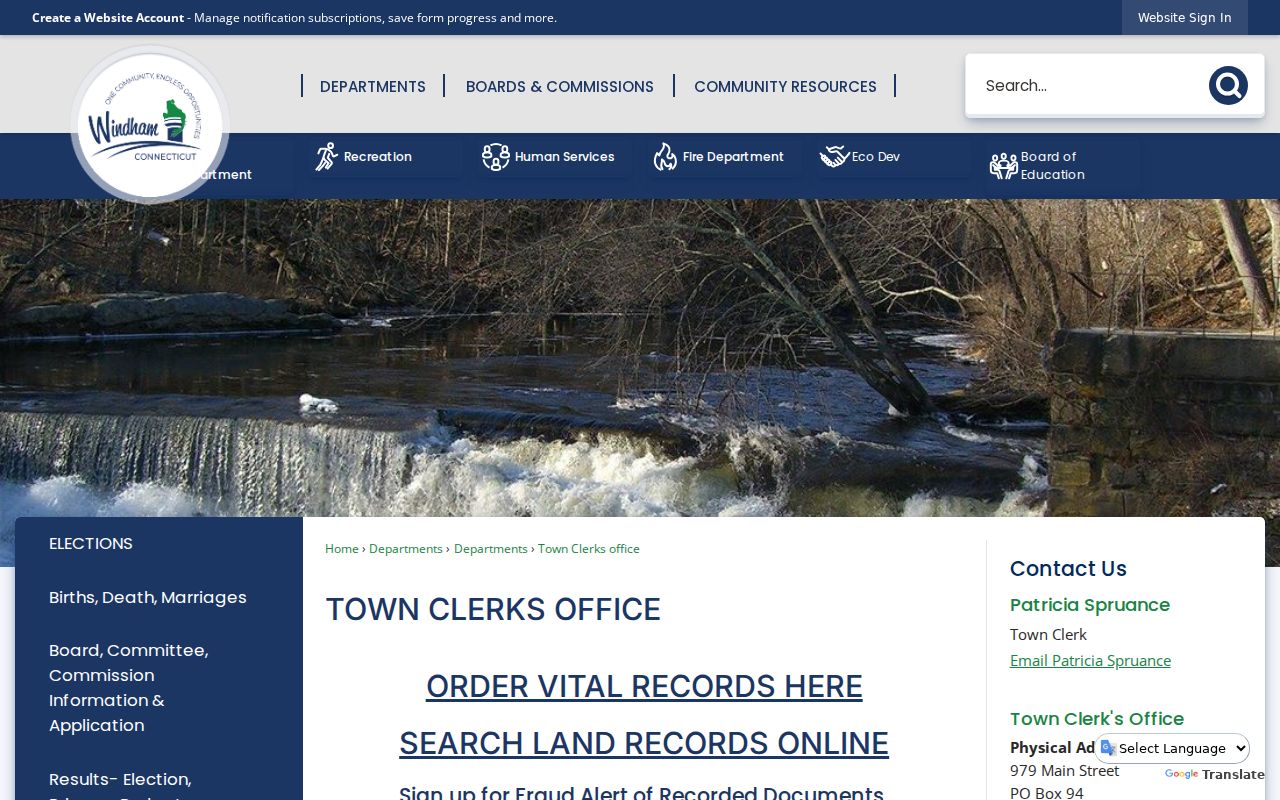
Fraud Alert emails after a document is recorded; town reports stress that notification cannot prevent a fraudulent filing, so it supplements rather than replaces record verification.
Current Sources in the Windham Residents Directory
Present-day sources are narrower than their familiar labels suggest. The property system lists parcel interests, the voter tool checks one registration, the recording index lists parties to instruments, permits document work at an address, and state portals record cases, credentials, entities, or custody. Treat each as dated evidence of the role it actually records.
| Windham source | People or roles indexed | Custodian | Route |
|---|---|---|---|
| AxisGIS and assessment roll | Owners and mailing recipients | Town Assessor | Free viewer; office follow-up |
| Individual voter lookup | One registered voter | Secretary of the State / registrars | Online name, town, and date-of-birth check |
| SearchIQS index | Grantors, grantees, and filing parties | Windham Town Clerk | Guest index; paid images or certified copy |
| PermitLink list | Owners and permit contacts in address records | Building Services | Public list; office or FOI fallback |
| Judicial and probate inquiry | Named parties and case roles | Connecticut courts | Online display; clerk/archive follow-up |
The sources overlap without becoming interchangeable. A court party name is not a home address; a parcel owner is not a household list; a registration result is not a general street roster. The Windham resident lookup shows how to test a single person across two independent identifiers.
Voter Lookup Is Not a Windham Street Roll
The public Connecticut tool is an individual confirmation route using the voter’s details and town. Windham’s registrars provide official contacts and links, while election results are aggregate. The centralized voter file is a different product: research documents a $300 CSV request, purpose limits, required requester details, and a privacy program. Public Act 26-1 §96 changes date-of-birth disclosure to year only, reinforcing the need to confirm the current rules.
The Windham registrar page is the local starting point. A missing public match may reflect input, inactive status, or confidentiality; it should not be converted into a claim about residence.
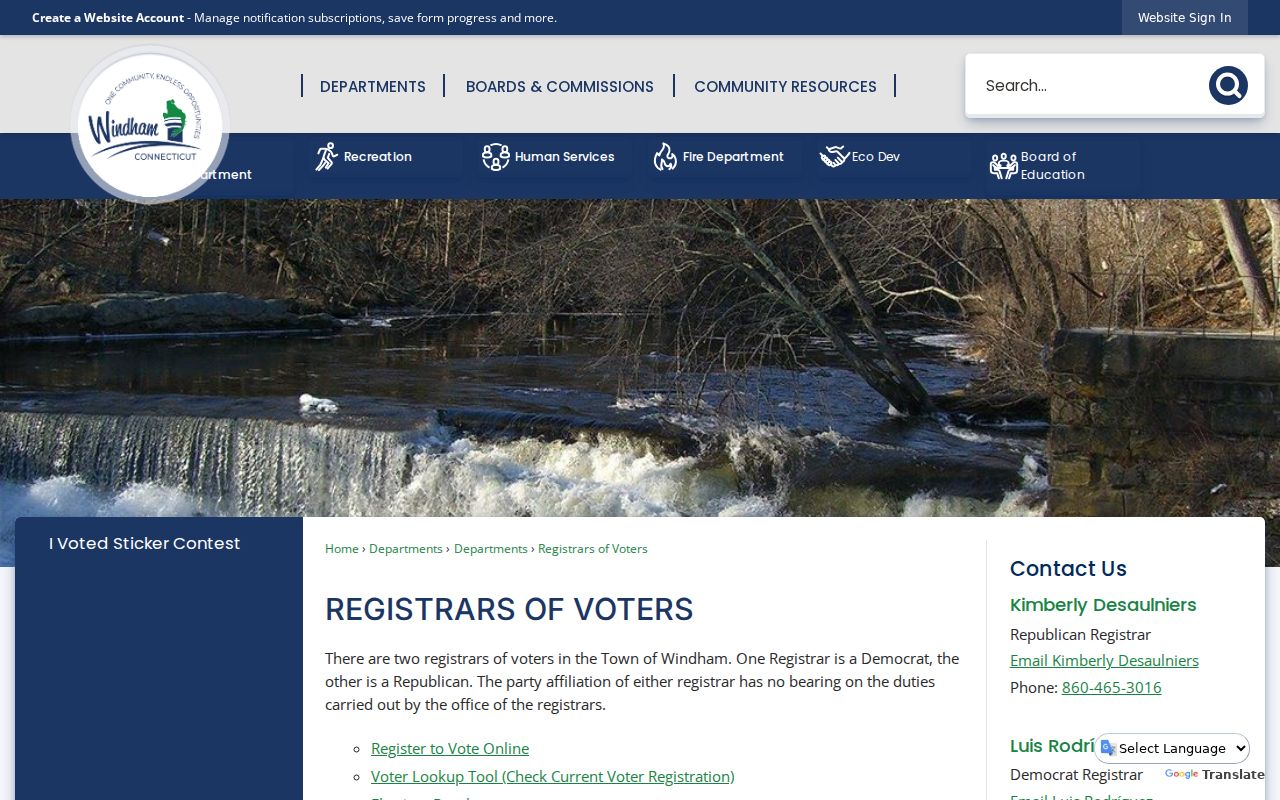
The captured town page shows the appropriate distinction between registrar contacts, individual lookup links, and published election information.
Use Courts and Probate as Dated Evidence
The Connecticut Judicial Branch party search accepts last and first name, location, category, case type, and name-search mode. Its property-address search can use town, street, optional ZIP, property type, case type, and status. Pending criminal and motor-vehicle dockets have separate name and docket modes. Displays can be limited by sealing, removal schedules, online date coverage, and later case activity.
Probate District 28 covers Windham-Colchester, not the same territory as the Windham Judicial District. The probate lookup generally reaches cases from January 5, 2011, with incomplete older coverage and a court or archive fallback. A fiduciary, creditor, attorney, heir, or party role is evidence of that case relationship, never automatic residence proof.
The official civil party search illustrates the fields available before a query.
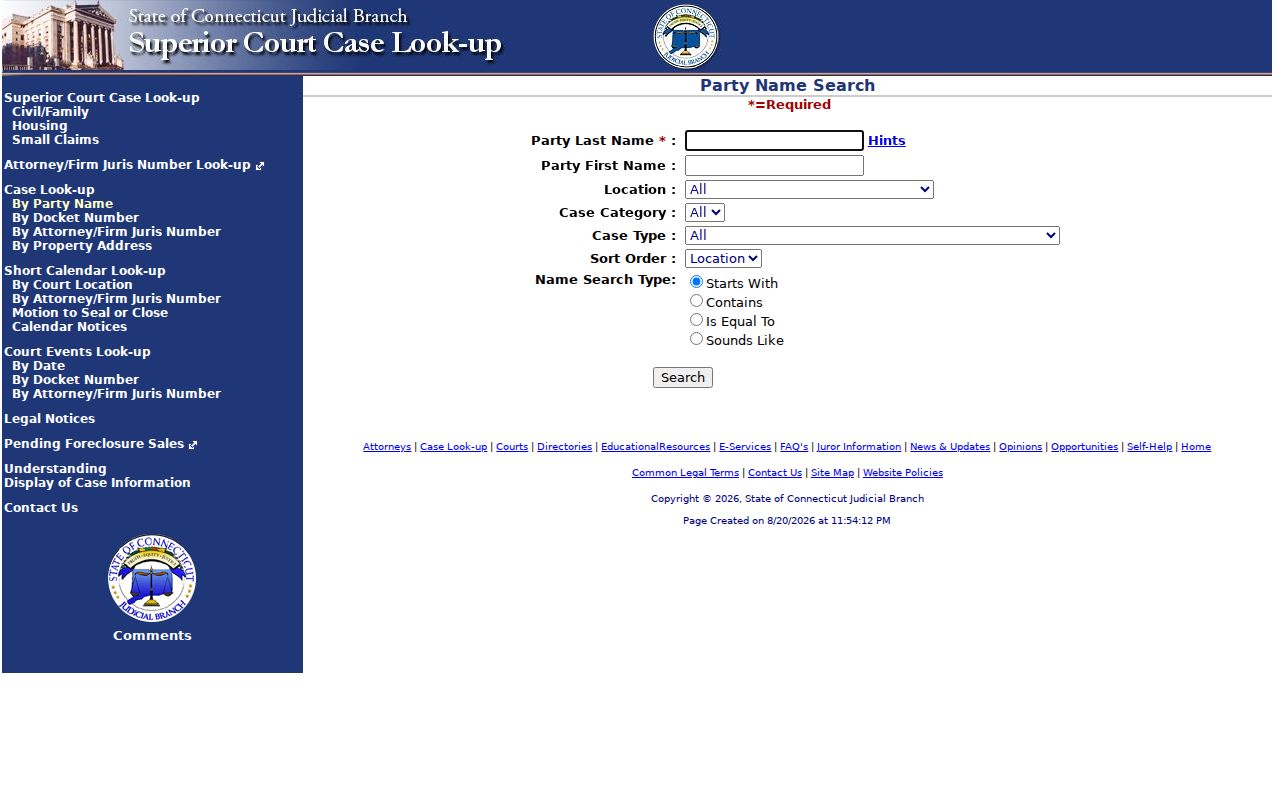
Record the docket, court location, party role, filing date, and display date before comparing the hit with another Windham source.
Vital Records Follow Eligibility, Not Directory Rules
The Windham Town Clerk issues certified local vital records and separates birth, marriage, and death orders in Permitium. Town guidance states $20 per certified copy. Birth records under 100 years are restricted; marriage and death access is broader, but Social Security numbers and protected fields are not broadly released. Statewide DPH offers mail, in-person, and online guidance when the town route does not fit.
Order requests ask for event details, applicant identity and relationship, contact and mailing information, purpose, identification, and record-specific facts. For adoption or birth-parent research, the DCF Search Unit and Reunion Registry follow consent and eligibility rules, with a master database since 1944 and a Probate route for earlier matters. These controlled channels belong in a careful directory search; they are not gaps to work around.
When Windham Portals Stop, Narrow the Request
Windham directs Connecticut Freedom of Information Act requests to the Town Clerk and says they are acknowledged within four business days. The local form captures requester contacts, a specific records description, optional upload, inspection or copy choice, responsible department, and fee acknowledgement. Municipal ordinary copies are listed at $0.50 per page, subject to certification, computer-record, statutory, exemption, and retrieval rules.
Describe the person or address, record type, department, and date range. Ask whether an index, in-person inspection, electronic copy, or certified copy is available. “All records about a person” is both difficult to process and likely to mix unrelated identities. The town FOI instructions and custodian’s reply are more authoritative than assumptions based on a blank portal.
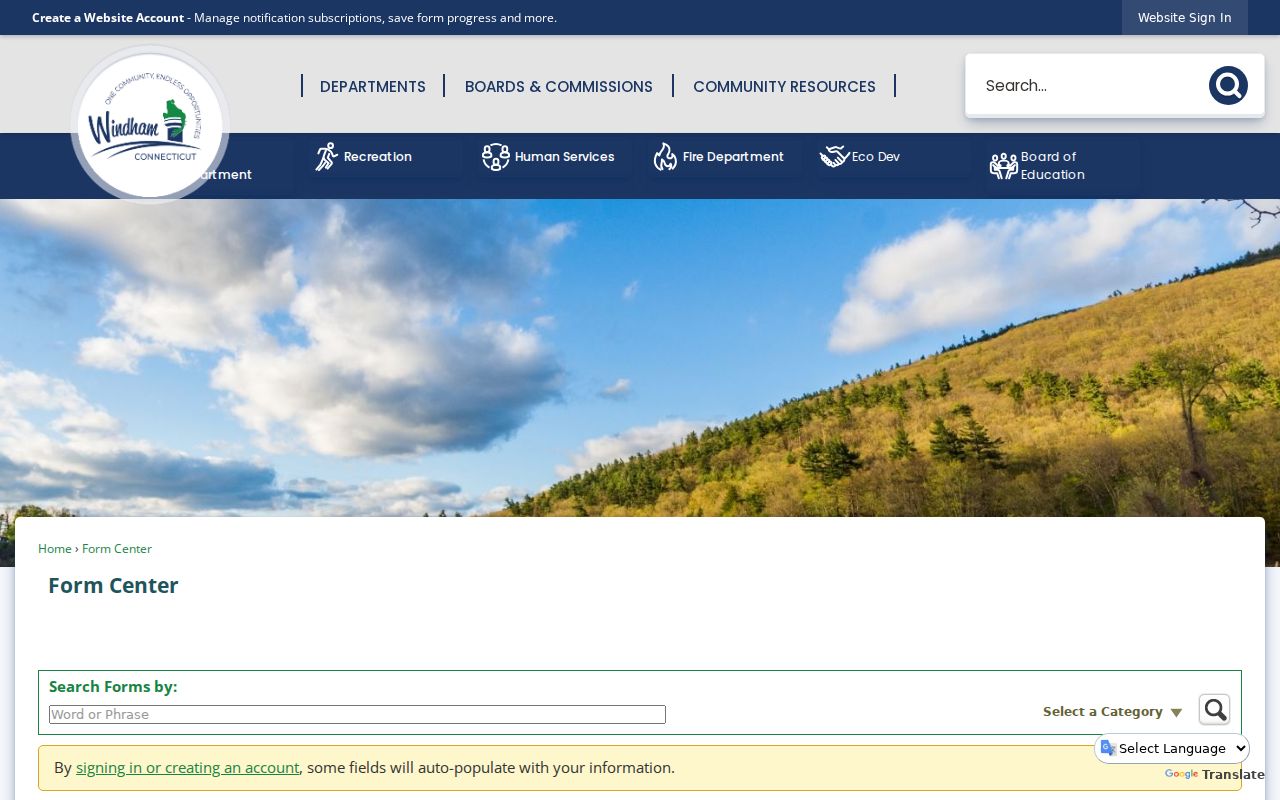
The form capture shows why a focused department, access method, and record description improve the request trail.
Keep Postal Labels and Legal Geography Separate
Windham-area post offices use 06226 for Willimantic, 06256 for North Windham, 06266 for South Windham, and 06280 for Windham Center. Nearby 06235 can appear in North Windham or Chaplin routing, but a postal city does not set the town boundary. Verify an exact delivery address through USPS, then map it to the municipal parcel and recorded legal description.
Census ZIP Code Tabulation Areas are statistical approximations rather than delivery routes or parcel boundaries. Likewise, Willimantic’s consolidation with Windham on July 1, 1983 explains why historical sources and current systems label the same place differently. Preserve the printed historical place, current municipality, and postal label as separate fields.
Historical Sources for the Windham Residents Directory
Digital Windham identifies a Price & Lee 1938–1939 Willimantic directory including Windham and Coventry, with citizen, street, business, map, officer, church, school, society, and corporation sections. A transportation exhibit also cites 1909–1910 entries at exact Willimantic streets. Those names and addresses establish what a publication printed for its year—not ownership then or residence now.
ECSU’s Center for Connecticut Studies holds regional directories, newspapers, manuscripts, reports, military rolls, and census material by appointment. Willimantic Public Library supplies The Chronicle and America’s News under its access rules; the Connecticut State Library provides town, probate, vital, census, map, newspaper, and directory guides; Jillson House adds local context and referrals. The Windham city directory traces these shelves, known year gaps, maps, and page-image cautions in depth.
Match Two Identifiers Before Naming a Resident
Common names, initials, punctuation, married names, business roles, and changing addresses create false joins. Require at least two independent identifiers—such as a shared dated address and parcel role, a book/page deed and assessor history, or a probate role and matching transfer. Keep owner, mailing recipient, taxpayer, situs, voter, permit contact, and occupant in separate columns.
Lawful personal use. Stop at the last verified record. Do not guess a protected or missing current address, reconstruct private household lists, or use public information to stalk, harass, intimidate, or harm anyone. Connecticut’s Safe at Home program, voter privacy rules, CGS §1-217, sealed cases, juvenile restrictions, and victim protections create intentional limits.
Commercial people-search summaries can be stale, merged, or detached from the custodian’s update cycle. An official index can also contain OCR or data-entry error, but it identifies the responsible office and supplies a correction or certified-copy route. Save the URL, query, date, result identifiers, and reason for the match so the conclusion can be checked later.
Business and professional sources add another controlled comparison. A Windham trade-name certificate under CGS §35-1 can connect a person or entity to a business name and principal address, while the Secretary of the State business search covers state entities and may not show records older than fifteen years online. Connecticut eLicense records a credential type, status, name, address field, dates, and detail information where available. These are evidence of a filing or professional role on the record date, not automatic proof of personal residence.
Building and tax sources require the same restraint. PermitLink rows may include parcel ID, owner, location, permit number, type, issue date, fees, status, work description, and inspection controls. A blank search does not establish that no older permit exists because the portal gives no complete historical cutoff. MyTaxBill can return different results by name and address, and a taxpayer or lien hit is time-sensitive. Ask Building Services or Revenue about the precise address and date range rather than extending a current screen backward.
Record a negative result too: portal, query spelling, filters, date searched, and known coverage. That distinguishes “not found in this index” from “no record exists” and makes the fallback clear—older SearchIQS books, a clerk or court counter, mail forms, the library, the State Library, ECSU by appointment, or a focused FOI request. A well-documented stop is more reliable than a confident guess.
The Windham residents directory is therefore a source map, not a merged database. Each search should end with a short evidence log stating what the record proves, what it does not prove, and when it was current. Recheck dynamic portals before relying on fees, status, or availability, and use the originating office whenever a signature, legal description, identity distinction, or certified fact controls the answer.